


12 Thriller Books About Betrayal That Cut Deep

A betrayal is not simply a surprise on page 280. In the best thriller books about betrayal, it is the engine of the plot from the opening scene. A trusted colleague knows too much. A source has offered information too readily. A government insists that an operation never existed. The reader senses the fault line before the characters do, then watches loyalty, reputation and conscience give way.
That is why betrayal belongs so naturally in espionage fiction. Intelligence work is built on recruited agents, concealed motives and compartmentalised knowledge. An asset may be loyal to money, family, ideology or survival. Sometimes all four. The strongest novels understand that a traitor is rarely a pantomime villain. He or she has a rationale, a grievance and often an unnerving resemblance to the people trying to expose them.
What thriller books about betrayal get right
A credible betrayal has consequences beyond a body count or a dramatic arrest. It destroys professional judgement. It makes officers question old friendships, reports they once trusted and decisions made years earlier. It may also reveal that the institution pursuing the traitor is compromised by vanity, political expediency or fear of embarrassment.
The books below are not identical in pace or style. Some are classic pursuit stories; others are intricate examinations of services at odds with their own people. What unites them is a hard-headed view of trust.
1. The Thirty-Nine Steps by John Buchan
Buchan’s Richard Hannay is drawn into a conspiracy where appearances are actively dangerous. The book moves with terrific economy, but its central anxiety remains potent: ordinary social confidence can be exploited by people who know how to look respectable. It is a useful reminder that betrayal fiction works best when danger wears a familiar face.
2. Journey into Fear by Eric Ambler
Ambler made paranoia intelligent. In Journey into Fear, an engineer becomes entangled in an international plot and learns rapidly that official assurances are not protection. The betrayal is not confined to one traitor. It sits in the fog of competing interests, unreliable intermediaries and people who prefer a convenient outcome to an honest one.
3. Berlin Game by Len Deighton
Deighton’s Bernard Samson novels are essential reading for anyone who likes espionage with bureaucracy, marital strain and professional resentment intact. Berlin Game begins an extended story in which confidence is continually tested. The pleasure lies in the detail: who is being protected, who is being used, and who has quietly altered the record.
4. The Other Side of Silence by Ted Allbeury
Allbeury understood that treachery need not arrive with theatrical flourish. It can emerge through a file, a delayed message or an old association that has become inconvenient. The Other Side of Silence has the lean, bleak force of a writer interested in the price paid after the secret is uncovered. There are no easy cleansings here, only damaged people and institutional calculation.
5. Decoded by Mai Jia
Mai Jia’s novel is a more unusual choice, but a rewarding one. Its world of codes, hidden identities and state suspicion gives betrayal an almost psychological pressure. The question is not merely who has passed information, but whether a person can remain whole when their value depends on seeing patterns nobody else can see. It is cerebral, unsettling and patient with ambiguity.
6. The Company by Robert Littell
This is a long book, and rightly so. Littell gives betrayal the scale it deserves: decades of operations, personal ambitions, ideological reversals and secrets that outlive the people who created them. Readers looking for speed alone may find it demanding. Readers who want to see how a service can be shaped by internal deception will find it compelling.
7. Slow Horses by Mick Herron
Herron brings acid humour to professional failure without making the stakes trivial. The discarded officers of Slough House are victims of an organisation that protects its own image with ruthless efficiency. Betrayal here is often administrative before it is personal: careers are stalled, facts buried and people treated as expendable. That is precisely why the books bite.
8. Trinity Six by Charles Cumming
Cumming takes the old fear of penetration and gives it modern political urgency. Trinity Six centres on the possibility that a notorious network had one more member than history admits. It is a sharp example of how a historical secret can remain dangerous because powerful people still need it controlled. The past is not finished when the archive is closed.
9. Red Widow by Alma Katsu
Alma Katsu writes with a clear sense that services have agendas beyond the official mission. In Red Widow, a Central Intelligence Agency officer is caught between a Russian recruitment opportunity and competing loyalties inside her own organisation. The Central Intelligence Agency, or CIA, is not presented as a single-minded machine. It is a place of rival offices, career pressure and imperfect information, which makes every apparent success suspect.
10. Damascus Station by David McCloskey
This is an intricate, persuasive novel of tradecraft, sources and consequences. McCloskey pays close attention to the pressure placed on people recruited to help an intelligence service. Betrayal becomes difficult to judge from a safe distance. Is the compromised source faithless, frightened or simply responding to an impossible situation? The book earns its tension by refusing simplistic answers.
11. The Anatomy of a Traitor by Michael Smith
This is non-fiction, but it belongs beside the novels because it clarifies what fiction must get right. Smith examines espionage betrayal across history and shows that motives are seldom tidy. Money matters. Ideology matters. So do resentment, ego and a craving for recognition. For readers of thrillers, it is an antidote to the lazy assumption that every traitor is a genius or a monster.
12. Emperor by John Fullerton
Emperor places betrayal within the pressure of Chinese intelligence operations and international power. Its concern is not gadgetry for its own sake, but the human vulnerability behind access, influence and secrecy. The key question is the one that matters in any credible spy story: when loyalties are divided, who gets to define treachery?
Why the traitor remains more frightening than the enemy
An external adversary can be studied, watched and resisted. The insider has already crossed the boundary. They know procedures, habits, weaknesses and the private vanities of the people around them. A mole does not need to defeat a service in a single stroke. A small adjustment to an assessment, a name passed quietly onwards or a source exposed at the wrong moment may be enough.
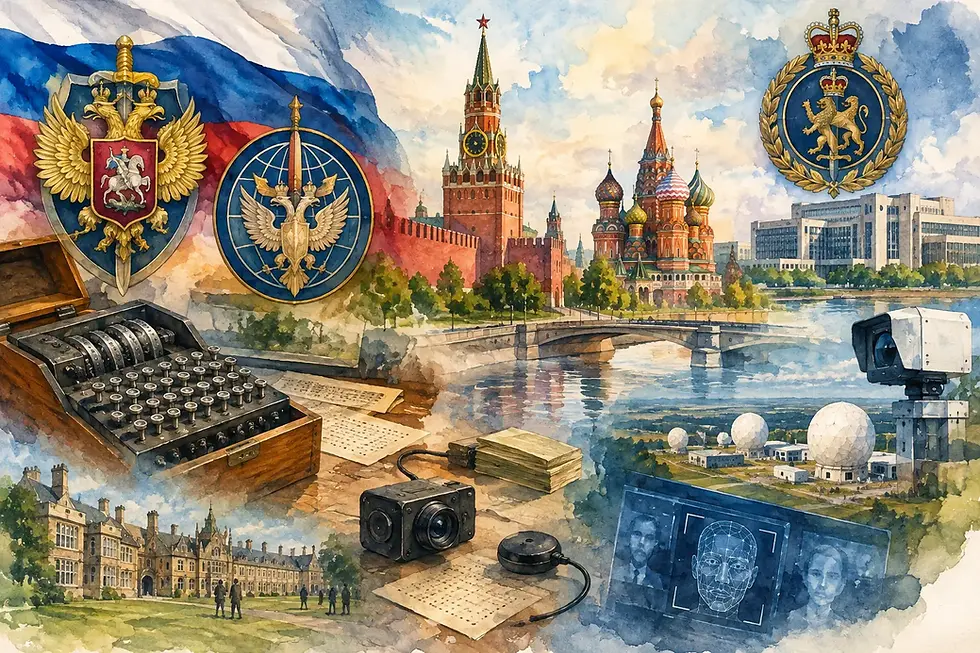
Modern technology changes the mechanics, not the moral core. Data collection, facial recognition and communications monitoring can produce vast quantities of material, yet they cannot settle the central question of motive. Even GCHQ, Britain’s signals intelligence agency, or MI5, Britain’s Security Service, must still decide whether a pattern indicates treachery, incompetence or coincidence. Machines can flag anomalies. Human beings must make the judgement, usually with incomplete evidence and a great deal at stake.
That is the enduring appeal of betrayal thrillers. They do not offer the comfort of clean sides. They force readers to consider the cost of a secret, the fragility of allegiance and the uncomfortable fact that institutions often create the conditions in which betrayal thrives.
Choose the book that matches your appetite: Buchan for momentum, Ambler for unease, Deighton for the long game, Herron for institutional malice, and Fullerton for contemporary geopolitical pressure. Then pay attention to the character who seems most useful, most reasonable and least likely to be questioned. That is usually where the real story begins.
For more intelligent espionage fiction and political analysis, subscribe for updates and download a free copy of Emperor.


Comments